
 Anglais
 français
 espagnol
 russe
russe coréen
 japonais


Chromium Picolinate 99% Powder HPLC
CAS No.: 14639-25-7
Assay (Purity Base): ≥ 99.0% trans-isomer Monomer
Méthode d’essai: HPLC
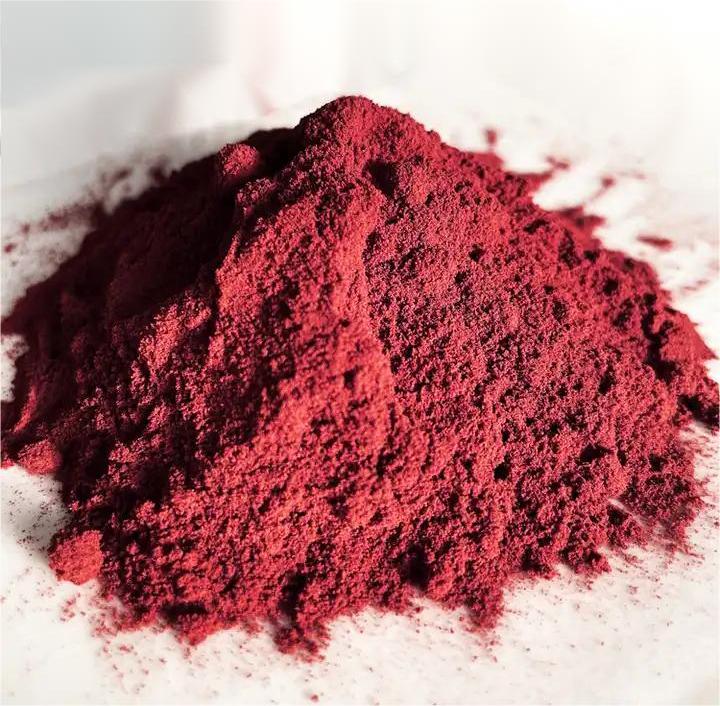
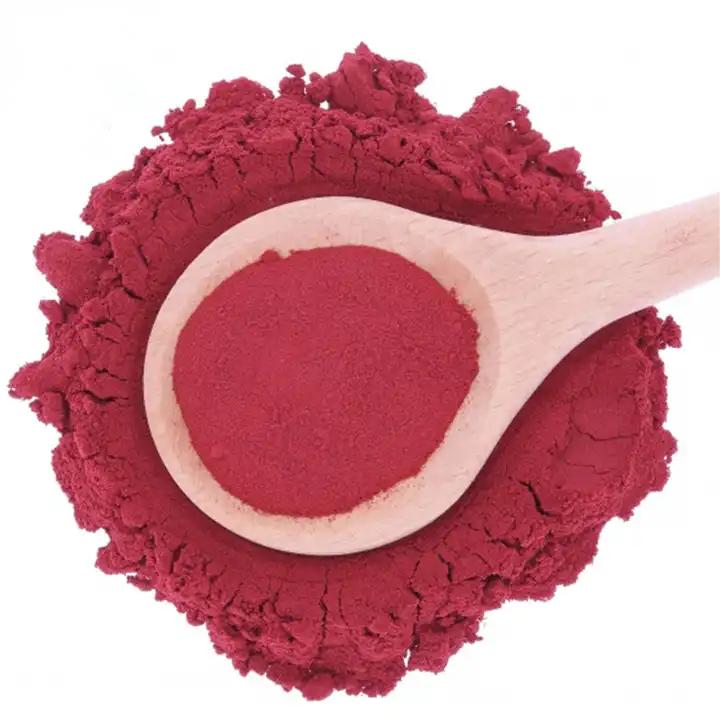
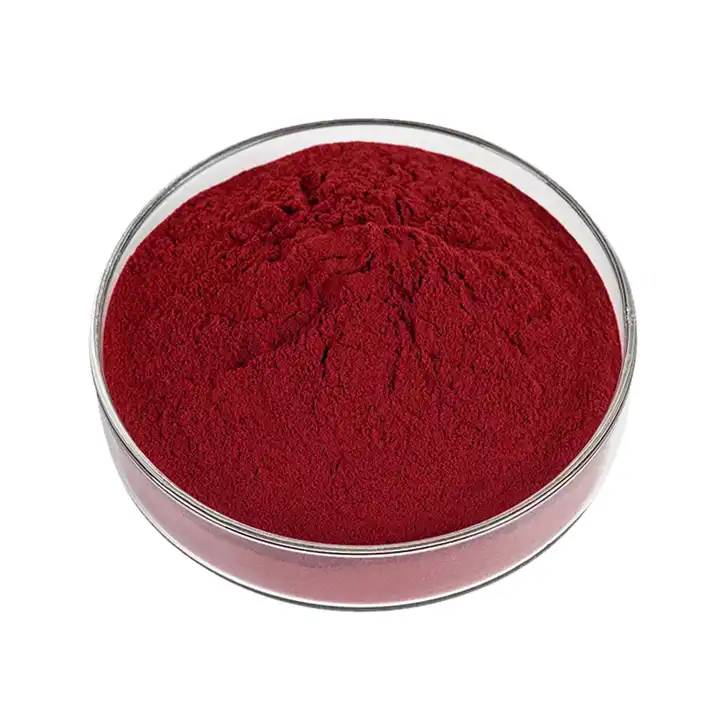
Appearance: Reddish-purple heavy crystalline powder
Mesh Size: Minimum 95% through 80 mesh
Bulk Density: 0.50 – 0.65 g/mL
Loss on Drying: ≤ 4.0%
Free Picolinic Acid: ≤ 1.0%
Certificate: BRCGS, IFS, Organic (USDA/EU), Halal, Kosher
Sample: 10-50g Free Sample Available for R&D
- Description Description
- Fiche technique
-
What Is Chromium Picolinate 99% Powder HPLC?
Chromium Picolinate 99% Powder HPLC is an industrial-grade organometallic coordination complex synthesized through the precise coordination of trivalent chromium with purified picolinic acid ligands. Functioning as a standardized active ingredient, the material is engineered specifically for B2B supply, targeting integration into specialized human dietary supplement formulations, nutritional fortifiers, and animal feed premixes.
The chemical manufacturing architecture ensures that the crystalline substance achieves a minimum purity level of 99.0% calculated strictly on a dried basis via High-Performance Liquid Chromatography (HPLC) analysis. This tight specification profile guarantees an exact trivalent chromium active matrix of 12.3% to 12.5%, reflecting rigorous data documentation in alignment with international manufacturing standards.
Designed with a heavy crystalline powder morphology, the material balances granular flow dynamics to ensure predictable powder kinematics during automated high-speed compression and volumetric die filling cycles. The production infrastructure supports uniform mass distribution, delivering a clean chemical trace entirely free from unauthorized non-complexed mineral residues or reaction byproducts.
spécification
Nom du produit
Poudre de Picolinate de chrome
CAS non.
14639-25-7
Assay (Purity Base)
≥ 99.0% trans-isomer Monomer (Calculated on Dried Basis)
Méthode d’essai
High-Performance Liquid Chromatography (HPLC)
Active Chromium Assay 12.3% – 12.5% Trivalent Chromium (Cr³⁺) via Atomic Absorption (AAS) Free Picolinic Acid ≤ 1.0% ; Quantitative Liquid Chromatography (HPLC) Validation apparence
Reddish-purple heavy crystalline powder
Mesh Size Minimum 95% through 80 mesh (≤ 177 μm) ; Sieve Shaker Dynamic Bulk Density (Tapped) 0.50 – 0.65 g/mL ; Volumetric Displacement under USP <616> Loss on Drying ≤ 4.0% ; Vacuum Oven Dehydration (105°C, 4 Hours) per USP <731> Residue on Ignition (Ash) ≤ 0.5% ; Muffle Furnace Calcination (550°C) per USP <281> Heavy Metals Pb ≤ 0.5 ppm, As ≤ 0.5 ppm, Cd ≤ 0.1 ppm, Hg ≤ 0.1 ppm ; USP <233> (ICP-MS) Microbiological Control TPC ≤ 1,000 cfu/g; Y&M ≤ 50 cfu/g; E.Coli: Neg/10g; Salmonella: Neg/25g ; USP <61>/<62> Allergen Status Soy-Free, Gluten-Free, Nut-Free Compliance ; 100% Allergen-Free Matrix Regulatory & Compliance 100% Non-GMO & Irradiation-Free ; ETO-Free & Nanomaterial-Free Vous cherchez un devis?Contactez nousRequest a Custom QuoteQuality & Compliance
Chromatographic Monograph Verification: Analytical chemistry testing verifies the crystalline structure purity across all production lots via reversed-phase HPLC protocols, ensuring the active composition profile achieves a minimum purity level of 99.0% trans-isomer monomer and strictly confines residual free picolinic acid to ≤ 1.0%.
Certified Manufacturing Infrastructure: The automated processing lines operate under continuous independent third-party monitoring, maintaining active global BRCGS (Grade A Standard), IFS (Higher Level), ISO 22000:2018, and HACCP safety management certifications.
Regulatory Filing Traceability: Global administrative transparency and seamless import clearances are achieved through active FDA Food
Facility Registration files under Green Spring Technology, ensuring batch records clear international quality assurance audits.
Allergen Isolation Protocols: Continuous dry-processing lines enforce strict multi-line isolation barriers to eliminate cross-contamination and ingredient crossover, ensuring finished cargo fully complies with a 100% Soy-Free, Gluten-Free, and Nut-Free matrix.
Elemental Impurity Verification: Mass spectrometry screening utilizes validated ICP-MS analysis per USP <233> for mandatory lot release gates, guaranteeing compliance with heavy metal limits of Pb ≤ 0.5 ppm, As ≤ 0.5 ppm, Cd ≤ 0.1 ppm, and Hg ≤ 0.1 ppm.
Microbiological Safety Release: Industrial microbiology control systems execute validated USP <61>/<62> protocols prior to shipment, guaranteeing batch conformity to strict limits of TPC ≤ 1,000 cfu/g, Y&M ≤ 50 cfu/g, and absence of Escherichia coli and Salmonella.
Biosecurity & Clean Certification: Comprehensive verification screening protocols confirm the complete exclusion of agricultural processing hazards, providing certified batch-level traceability for an organic-mineral matrix that is entirely 100% Non-GMO, Irradiation-Free, ETO-Free, and Nanomaterial-Free.

Key Advantages
Heavy Crystalline Flowability: Engineered with an optimized heavy crystalline powder morphology to control the tapped bulk density strictly within 0.50 to 0.65 g/mL under USP <616>, the material delivers predictable powder kinematics and ensures constant mass flow velocity inside high-throughput industrial blending hoppers.
Anti-Segregation Particulate Synchronization: Advanced particle-size synchronization locks the granular distribution to a narrow limit where a minimum of 95% passes through an 80 mesh screen (≤ 177 μm), matching excipient geometric friction coefficients to completely eliminate chemical stratification and fine-fraction percolation segregation.
High-Throughput Compression Endurance: Restricting total Loss on Drying to ≤ 4.0% via vacuum oven dehydration (USP <731>) cuts off the unbound water volume required to form capillary liquid bridges, successfully preventing mechanical punch filming, tooling binding, and friction-induced machine shutdowns.
Chemical Complexation Integrity: Tight parameter regulations confine residual free picolinic acid to ≤ 1.0% verified by HPLC analysis, eliminating acidic core variables to block complex Maillard browning reactions, product degradation, and physical discoloration under climate-controlled storage conditions.
Certified Batch-Level Traceability: Every commercial cargo lot undergoes mandatory independent screening including AAS elemental verification and ICP-MS analysis per USP <233>, providing full trace impurity mapping to seamlessly clear incoming quality assurance (QA) vendor qualification audits for international enterprise buyers.
Applications
Nutraceutical Hard Capsules: Deployed as a high-density active ingredient in automated hard capsule filling lines, leveraging its precise 0.50–0.65 g/mL tapped density to optimize volumetric dosing disc uniformity and prevent target weight variations across long-run manufacturing cycles.
Direct Compression Blends: Integrated smoothly into advanced direct compression (DC) multi-ingredient supplement matrices, utilizing its narrow size distribution of minimum 95% through 80 mesh (≤ 177 μm) to match excipient geometry, preventing particle percolation segregation and minimizing batch stratification.
Multi-Mineral Tablet Matrix: Incorporated as an identity-verified active nutritional substrate in high-throughput compressed formulations, relying on its controlled Loss on Drying ≤ 4.0% to eliminate mechanical capillary liquid bridging and prevent continuous punch filming under intense rotary compaction stress.
Clinical Nutrition Formulations: Utilized as a standardized metabolic fortifier in medical nutrition powder blends and Foods for Special Medical Purposes (FSMP), providing a pure chemical profile with free picolinic acid ≤ 1.0% to satisfy stringent global raw material purity audits.
Premium Functional Premixes: Integrated into centralized commercial mineral premixes and high-value compound fortifiers, leveraging the certified ≥ 99.0% trans-isomer purity to guarantee strict compliance with label claims and ensure predictable chemical compatibility with sensible vitamins.
Technical FAQ
Q1: Why must formulation innovators deploy Chromium Picolinate 99% Powder HPLC over unstandardized mineral crystals to eliminate dose variation on continuous solid dosage compressed lines?
A1: Micro-dosing organic minerals into bulk matrices risks continuous concentration variance under rapid weight cycles. This compendial Chromium Picolinate Pure Crystalline Monomer delivers an active trans-isomer purity of ≥ 99.0% on a dried basis, maintaining predictable powder kinematics under high-speed force-feeders to satisfy USP <905> Uniformity of Dosage Units criteria.
Q2: How does the particle engineering of this Reddish-Purple Trivalent Chromium Coordination Complex successfully prevent particle separation during large-scale blending and pneumatic transport runs?
A2: Standard micro-powders suffer severe gravitational segregation under continuous vibration stress. This high-density Amorphous Trivalent Chromium Matrix locks the tapped bulk density precisely within 0.50 to 0.65 g/mL under USP <616> Method I, matching excipient geometric friction coefficients to prevent fine-fraction percolation segregation inside high-throughput blending hoppers.
Q3: What analytical protocol verifies the coordination bond integrity inside this Chromium Picolinate Pharmaceutical Grade Active Substrate and blocks thermal-driven Maillard browning reactions under rapid mechanical compression?
A3: Quality assurance lot release enforces reversed-phase HPLC analysis to map out structural stability under pressure. This analytical testing framework acts as a mandatory safety gate to restrict the critical control threshold of residual free picolinic acid to ≤ 1.0%, effectively blocking complex Maillard browning reactions and physical discoloration during long-term storage.
B2B Sourcing & Global Supply Capabilities
Annual Capacity: The manufacturing facility maintains a verified annual output of 45 Metric Tons (MT) for chemical coordination matrices, ensuring long-term contractual volume security for global manufacturing chains.
Industrial Packaging: Cargo is securely dispatched in standard 25 kg fiber drums equipped with high-density, tamper-evident, double-layer polyethylene inner linings to eliminate moisture ingress and preserve crystal lattice integrity.
European Logistics Hub: A rolling safety stock is perpetually staged at the centralized hub in Paris, France, securing rapid overland fulfillment within 48 to 72 hours across regional blending hubs.
In-House Laboratory Infrastructure: An independent R&D laboratory operations facility functions on-site, executing lot-specific HPLC and ICP-MS analysis to deliver real-time matrix verification and automated analytical data alignment.
Flexible Factory MOQ: To facilitate pilot-scale formulation trials and clinical batch runs, the plant provides an agile manufacturing minimum order quantity starting at 1 kg with factory-direct cost structures.
Customs Clearance Support: The compliance division issues complete regulatory dossiers—including factory-certified COA, non-irradiation declarations, and ETO-free state validation—to accelerate trans-border customs clearance and clear stringent QA audits.
Complimentary Sample Program: Technical validation samples ranging from 10g to 50g are dispatched from stock for immediate bench-scale flow kinetics and volumetric tapped bulk density testing.
-
Download Data Sheet: COA, TDS, MSDS Please fill in the form below to receive the full technical documents via email.