
 Anglais
 français
 espagnol
 russe
russe coréen
 japonais


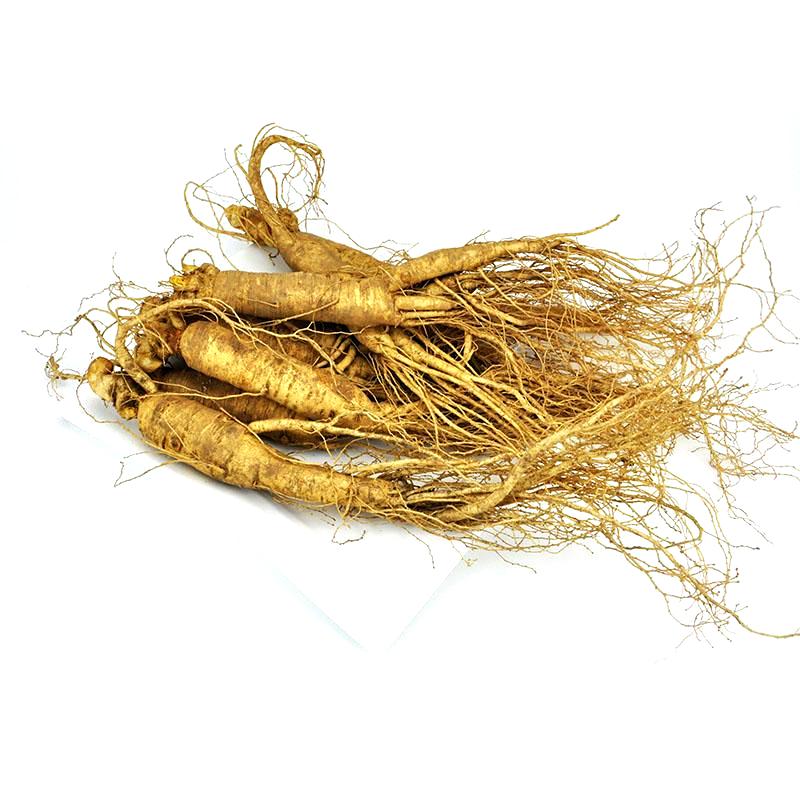
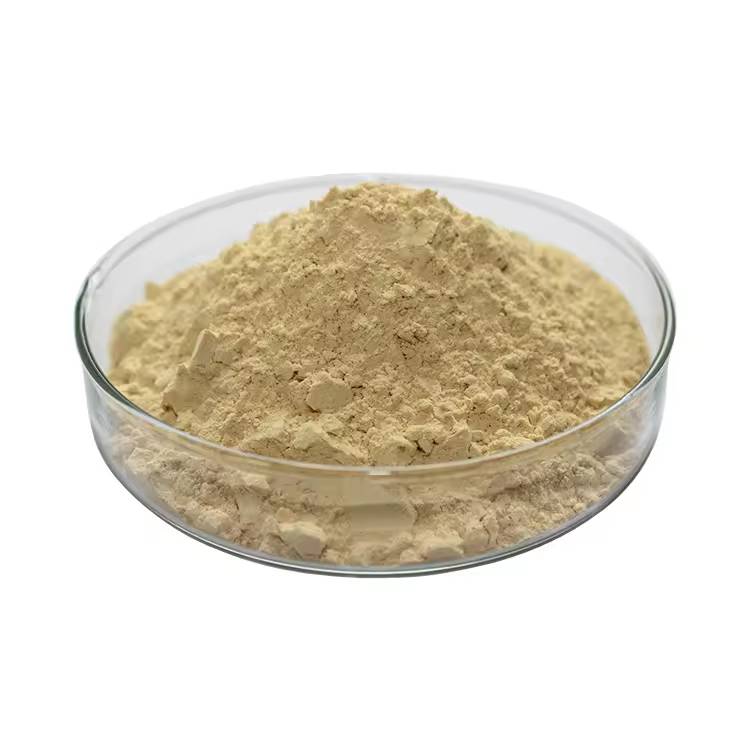
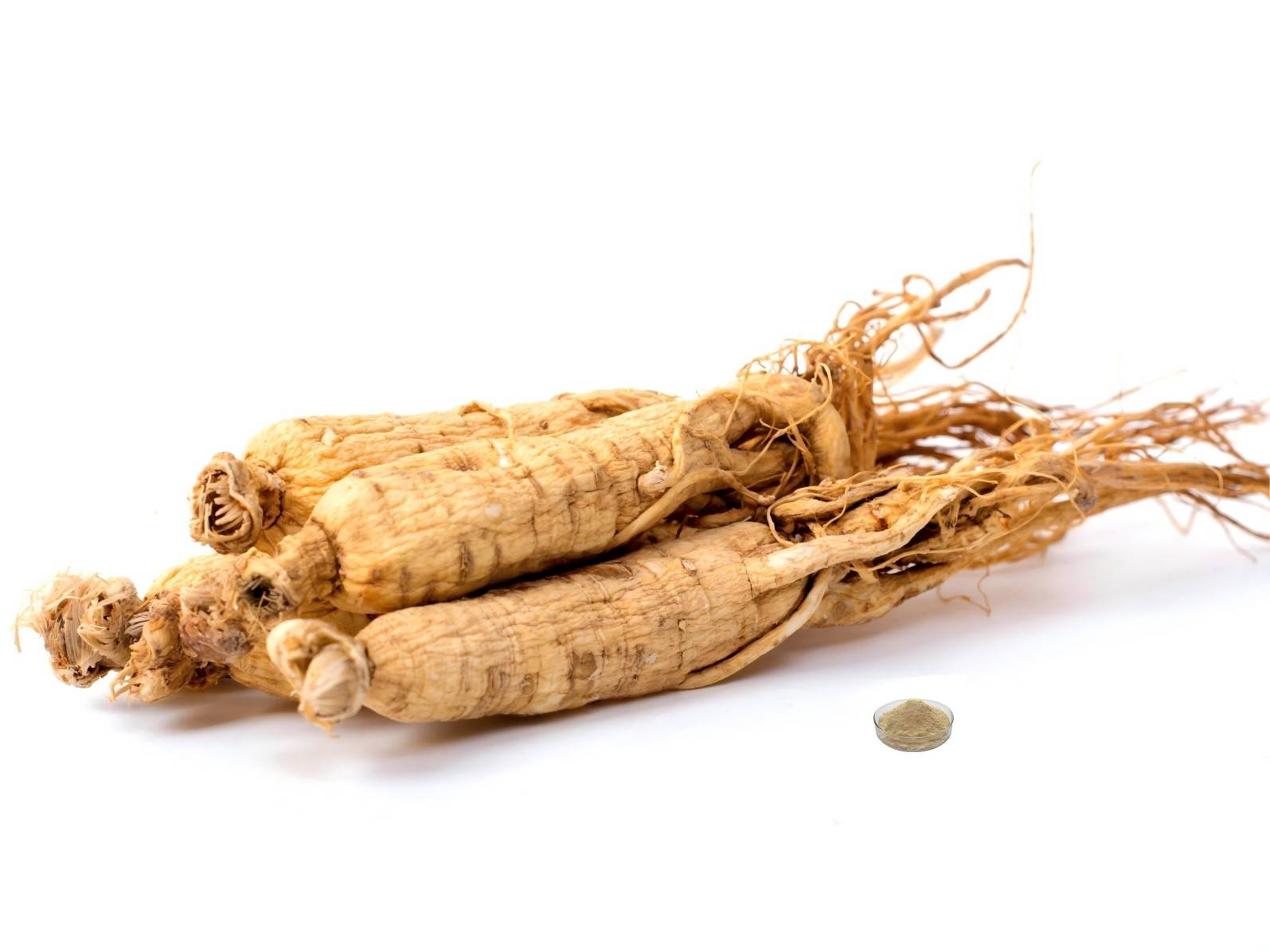
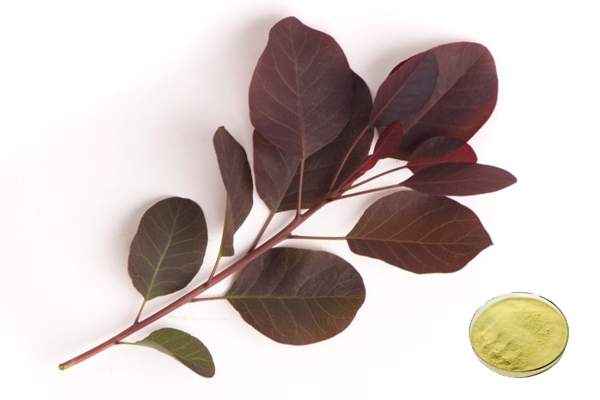
Ginseng Root Extract Powder 80% Ginsenosides HPLC
Source: Dried Roots & Rhizomes of Panax ginseng
Active Ingredients: Total of Ginsenosides (Sum of Rb1, Rc, Rd, Re, Rf, Rg1)
Assay: ≥ 80.0% Ginsenosides
Testing Method: HPLC/HPLC
Excipient Carrier: Carrier-free processing standard
Bulk Density: 0.40 g/mL to 0.60 g/mL
Appearance: Light Yellow Fine Powder
Certificate: BRCGS, IFS, Organic (USDA/EU), Halal, Kosher
Sample: 10-50g Free Sample Available for R&D
- Description Description
- Fiche technique
-
What is Ginseng Root Extract Powder 80% Ginsenosides HPLC/HPLC?
Ginseng Root Extract Powder 80% Ginsenosides HPLC is a standardized natural food raw material derived from Panax ginseng C.A. Mey. rootsEt en plusstandardized via HPLC to contain minimum 80.0% Ginsenosides. Fixed to 100% through 80 Mesh (≤ 177 μm) voir aussi: with a bulk density of 0.40 g/mL to 0.60 g/mL, this fine matrix optimizes granular flowability for high-speed capsule filling.
Technologie printemps vert enforces a strict low-temperature spray-drying framework restricted below 75°C, locking moisture content at Loss on Drying (LOD) ≤ 5.0% by USP <731>Et en plusTotal Ash at ≤ 5.0%. This thermal control prevents material moisture-binding kinetics, systematically eliminating cold-flow powder caking and mechanical hopper bridging.
Utilizing a specialized hydroalcoholic wash, volatile kinetics are monitored via GC-HS to restrict residual ethanol strictly to ≤ 5,000 ppm (with an internal QA release cap of ≤ 1,000 ppm) under USP <467>. This chemical isolation preserves cross-linking stability, preventing long-term HPMC vegetable hard capsule shell embrittlement or leakage anomalies.
This standardized lipophilic saponin matrix guarantees physical blending parity and maximum plastic deformation during industrial mixing, preventing component classification or particle segregation. The traceable, SO2-free lineage ensures full conformity to USP <2232> and USP <2021/2022> criteria, facilitating frictionless corporate QA desk audits.
spécification
Nom du produit
Ginseng Root Extract Powder
Nom Latin
Panax ginseng C.A. Mey. (Araliaceae)
Source:
Dried Roots & Rhizomes of Panax ginseng
Ingrédients actifs
Total des ginsénosides (Sum of Rb1, Rc, Rd, Re, Rf, Rg1)
analyse
≥ 80.0% Ginsenosides
Méthode d’essai
High-Performance Liquid Chromatography (HPLC)
Identification Track Thin-Layer Chromatography (TLC) fingerprinting matches USP/EP profiles Extraction Solvent Food-Grade Ethanol & Purified Water (Hydroalcoholic Matrix) apparence Light Yellow to Light Brown Free-Flowing Fine Powder
Excipient Carrier Carrier-free processing standard Mesh Size 100% through 80 Mesh (≤ 177 μm) Bulk Density 0.40 g/mL to 0.60 g/mL for automated volumetric dosing Loss on Drying ≤ 5.0% verified under USP <731> / EP 2.2.32 gravimetric protocols Total Ash ≤ 5.0% monitored under USP <561> compendial guidelines Acid-Insoluble Ash ≤ 1.0% verified under current European Pharmacopoeia (EP 2.4.16) Heavy Metals Pb ≤ 1.0 ppm; As ≤ 0.5 ppm; Cd ≤ 0.1 ppm; Hg ≤ 0.1 ppm (USP <2232> / EC No 1881/2006) Microbiological Control TPC ≤ 1,000 cfu/g; Y&M ≤ 100 cfu/g; E. coli: Neg/10g; Salmonella: Neg/25g (USP <2021/2022>) Résidus de pesticides Compliant with EC No 396/2005 and USP <561> Residual Solvent Ethanol ≤ 5,000 ppm (Internal QA Release Cap ≤ 1,000 ppm) (USP <467> Class III) Pureness & Safety Status SO2 Free (No Sulfur Fumigation) / Non-Irradiated / Non-GMO / Allergen-Free Vous cherchez un devis?Contactez nousRequest a Custom QuoteQuality & Compliance
GFSI Manufacturing Accreditation
Certified under BRCGS (Grade A) and IFS (Higher Level) protocols, fully satisfying global GFSI vendor validation standards.Dietary & Organic Clearance
Registered and active with EU Organic, USDA Organic, Halal, and Kosher to guarantee traceable, non-irradiated Araliaceae pedigree.Identity & Assay Validation
Standardized via HPLC to guarantee ≥ 80.0% Ginsenosides, backed by batch-specific TLC fingerprinting to completely eliminate stem or leaf adulteration risks.Residual Solvent & HPMC Capsule Safety
Residual ethanol is strictly capped at ≤ 5,000 ppm (Internal QA release limit ≤ 1,000 ppm) under USP <467> Class III, preventing HPMC capsule shell embrittlement.Rhizome Soil Contamination Enforcement
Compliant with European Pharmacopoeia EP 2.4.16, enforcing Total Ash ≤ 5.0% and Acid-Insoluble Ash ≤ 2.0% to verify the absolute removal of soil silicates.Global Cross-Border Access Limits
Heavy metals limited to Pb ≤ 1.0 ppm; As ≤ 0.5 ppm; Cd ≤ 0.1 ppm; Hg ≤ 0.1 ppm (USP <2232>), with zero-tolerance pesticide compliance and USP <2021/2022> microbiological clearance.Regulatory Dossier Traceability
Every commercial shipment is backed by a complete compliance dossier containing batch-specific CoA, TDS, SDS/MSDS, Allergen-Free, and SO2-Free (No Sulfur Fumigation) verification to support immediate quality assurance sign-offs.

Key Advantages
Controlled Particle Kinetics and Hopper Flow Optimization
The isolation framework restricts the particle diameter to 100% through 80 Mesh (≤ 177 μm) without altering the native state of the amphiphilic triterpenoid saponins. This mechanical equilibrium maintains a stable bulk density of 0.40 g/mL to 0.60 g/mL across large-scale batches. This spatial consistency prevents powder bridging inside automated feed hoppers, securing a uniform volumetric dosing rate during high-volume production.
Controlled Solid-State Moisture and Metal Die Anti-Adhesion
Enforcing a strict solid-state moisture ceiling of Loss on Drying ≤ 5.0% (USP <731>) stabilizes the thermodynamic boundary water layers. This restriction minimizes static charge and suppresses cohesive capillary forces during automated dry blending operations. The stabilized moisture barrier completely eliminates tablet capping, material picking, and punch face filming on high-speed rotary presses.
Native Carrier-Free Purity and HPMC Shell Structural Inertness
The carrier-free isolation pathway yields a pure extract without using exogenous maltodextrin or silica excipients. The low-temperature drying sequence keeps the residual ethanol fraction ≤ 1,000 ppm, far below the USP <467> Class III limit of 5,000 ppm. This deep desolventization prevents chemical cross-linking with capsule matrices, eliminating shell softening, brittle fractures, or filling leakages.
Polysaccharide Elution and Formulation Rheology Stabilization
The hydroalcoholic fractionation step selectively elutes high-viscosity native root polysaccharides while concentrating Total Ginsenosides to ≥ 80.0% by HPLC. Removing these hygroscopic sugars minimizes the surface tackiness of the raw powder during environmental exposure. This processing layout allows R&D formulators to stabilize clean-label solid dose profiles using minimal masking excipients.
Applications
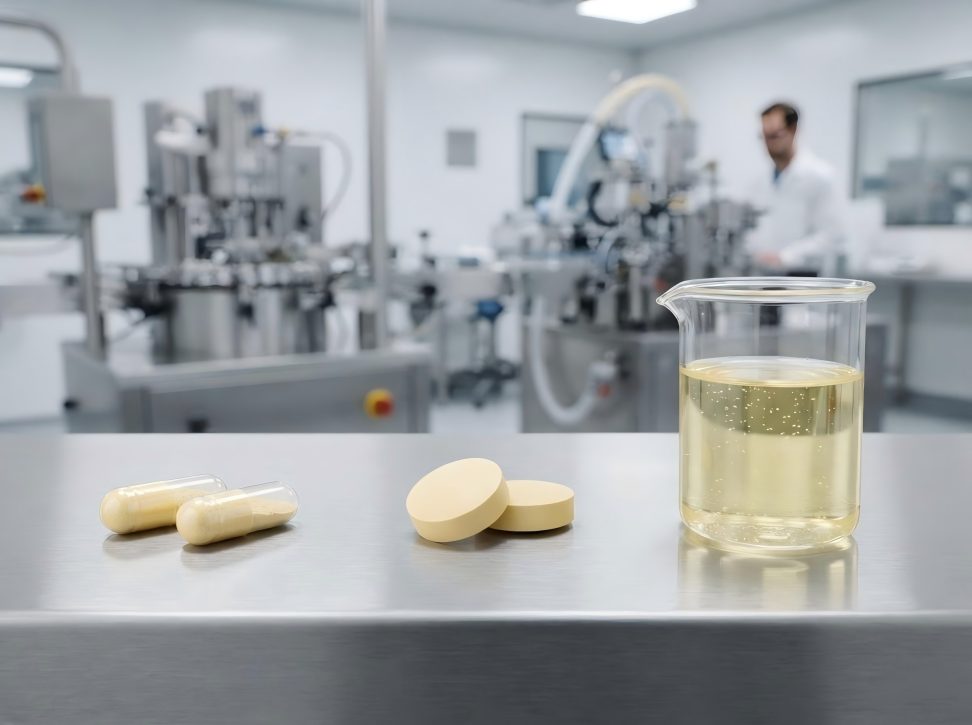
Hard Gelatin and HPMC Capsule Filling
The extract operates as a primary active matrix in hard gelatin and HPMC capsule formulations. Restricting the particle size to 100% through 80 Mesh ensures uniform mechanical blending with standard lubricants like magnesium stearate. Maintaining a solid-state Loss on Drying ≤ 5.0% prevents moisture transfer to the shell, eliminating capsule embrittlement or long-term shell softening on high-speed filling lines.
Direct Compression and Wet Granulation Tableting
The material is calibrated for direct compression or wet granulation tableting processes. Managing the bulk density between 0.40 g/mL and 0.60 g/mL ensures a stable mass flow rate into the die cavities. The controlled thermodynamic profile suppresses elastic recovery and mechanical capping issues, allowing continuous operation on high-speed rotary presses without punch face filming.
Clean-Label Ready-to-Mix (RTM) Solid Drinks
The material adapts to clean-label ready-to-mix (RTM) powder formulations. Selectively eluting high-viscosity native root polysaccharides minimizes environmental hygroscopic caking and surface tackiness. This modification ensures rapid dispersion kinetics in ambient water, reducing the formulation dependence on synthetic anti-caking excipients and chemical masking agents.
The carrier-free hydroalcoholic extract supports clear functional liquid dosages and nutritional syrups. The standardized ≥ 80.0% Ginsenosides by HPLC fraction dissolves thoroughly within targeted aqueous systems under specific pH controls. Eliminating large botanical impurities prevents molecular association and downstream sediment formation, maintaining clear stability during pasteurization.
Technical FAQ
Q1: How does the rheological variance of Panax ginseng root extract 80% ginsenosides affect high-speed capsule filling lines, and what precise parameters mitigate mechanical die-sticking?
A1: High-purity Panax ginseng C.A. Mey. root extract exhibits amphiphilic properties that lower its glass transition temperature under mechanical friction, causing deformation during dosing disk compression. Green Spring Technology mitigates this by enforcing a moisture ceiling of Loss on Drying ≤ 5.0% (USP <731>) and a bulk density of 0.40 g/mL to 0.60 g/mL. This thermodynamic control suppresses inter-particle capillary forces and eliminates powder bridging and punch face filming without using carriers.
Q2: Why is there an analytical discrepancy when quantifying total ginsenosides in botanical ginseng extracts using UV-Vis spectrophotometry versus the high-performance liquid chromatography protocol?
A2: UV-Vis spectrophotometry creates false-positive inflations by detecting non-specific botanical fractions and chromophores from stem or leaf parts, whereas HPLC provides definitive molecular separation. The specification enforces Total Ginsenosides ≥ 80.0% by HPLC (the mathematical sum of Rb1, Rc, Rd, Re, Rf, and Rg1). This matrix is coupled with TLC fingerprinting matching USP/EP profiles to verify true species authenticity and eliminate polysaccharide adulteration.
Q3: How does the processing layout of a carrier-free panax ginseng root extract powder secure the structural matrix integrity of soft gelatins and moisture-sensitive HPMC vegetable capsule shells?
A3: Unrefined root sugars undergo ambient phase transformations, migrating toward capsule shells and triggering chemical cross-linking or embrittlement. This carrier-free panax ginseng root extract powder operates a hydroalcoholic elution stage that strips residual ethanol to ≤ 1,000 ppm (USP <467> Class III). Combined with an acid-insoluble ash limit of ≤ 1.0% (EP 2.4.16), this layout neutralizes vapor pressure and prevents capsule softening, brittle fractures, or filling leakages.
B2B Sourcing & Global Supply Capabilities
Manufacturing Scale and Volume Capacity
Established in 2000, Green Spring Technology maintains an annual output capacity of 180 metric tons for this high-purity ginseng fraction. The standard wholesale packaging configuration is fixed at 25 kg/Drum utilizing food-grade inner liners. This industrial standardization ensures robust product containment and chemical stability during transcontinental maritime and aerial freight operations.
European Warehousing and Logistics Horizons
The global fulfillment infrastructure features an active logistics hub strategically located in Paris, France. This European warehouse deployment secures a 2-to-5 business day transit window for spot-stock delivery within the Schengen Zone. Shifting inventory proximity closer to downstream formulation plants eliminates oceanic transit variables and stabilizes manufacturing lead times.
Analytical R&D and Custom MOQ Flexibility
The factory integrates an independent R&D laboratory equipped with validated HPLC, GC-MS, and HPTLC instruments. This analytical depth permits pre-shipment batch verification against client monographs, while allowing a flexible factory-level MOQ for pilot-scale R&D. This adaptability lowers initial capital deployment risks for procurement teams during early-stage reformulations.
Cross-Border Customs Compliance and Supply Chain De-risking
Green Spring Technology provides technical administrative support to simplify cross-border customs clearance and eliminate global trade friction. The regulatory department generates comprehensive dossiers, including pesticide trace reports (EC No 396/2005) and heavy metal matrices (USP <2232>). This proactive verification prevents regulatory port holds, securing an uninterrupted flow of materials.
-
Download Data Sheet: COA, TDS, MSDS Please fill in the form below to receive the full technical documents via email.