
 Anglais
 français
 espagnol
 russe
russe coréen
 japonais


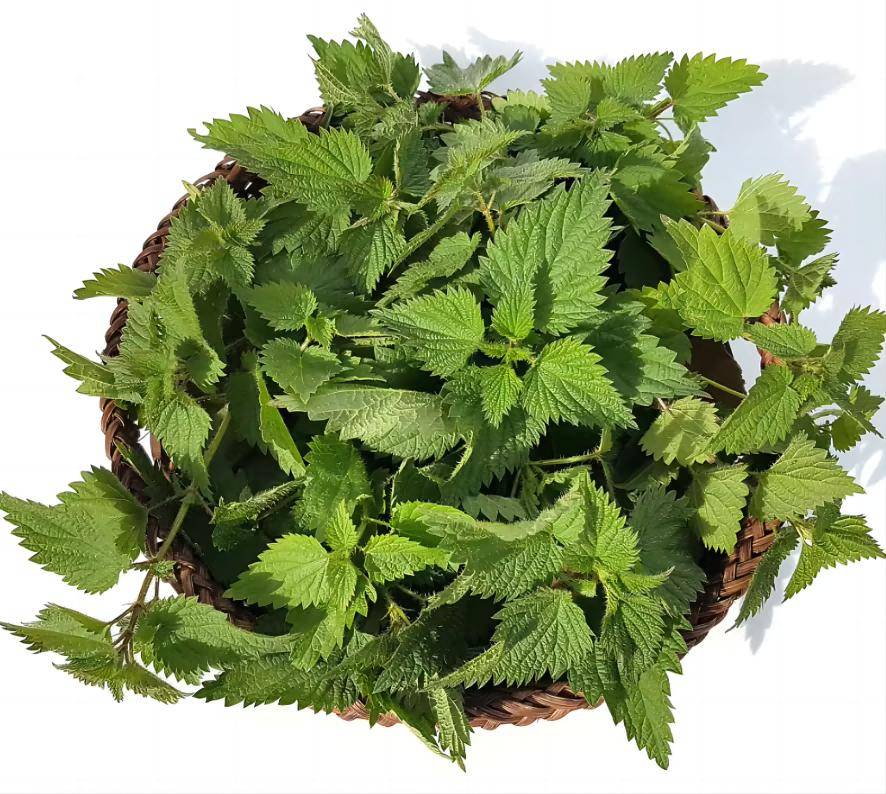
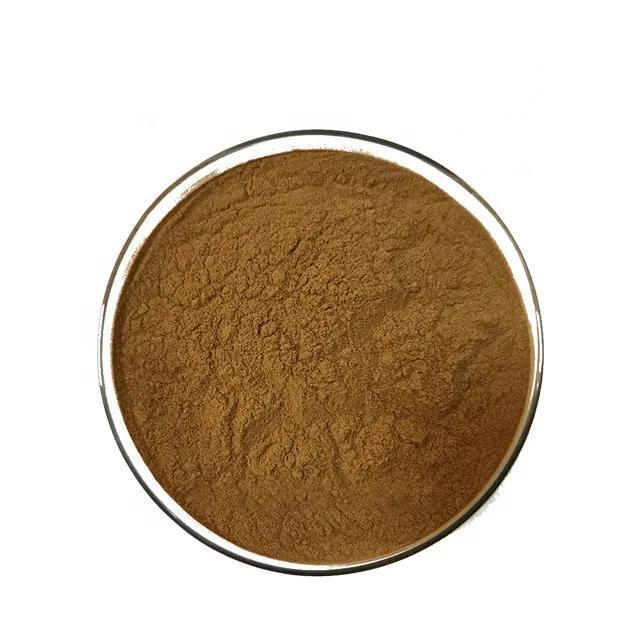
Standardized Nettle Root Extract | 1% Beta-Sitosterol Powder
Latin Name: Urtica dioica L.
Source: Nettle Root (Rhizome)
Specification: ≥ 1.0% Beta-Sitosterol (GC)
Extraction Solvent: Food Grade Ethanol & Water Only
Appearance: Brown Yellow Free-Flowing Powder
Heavy Metals: USP/EP Compliant
Pesticide Residue: Complies with (EC) No 396/2005 Standard
Certifications: BRCGS, IFS, Organic (USDA/EU), Halal, Kosher
Sample: 10g - 50g Free Sample Available for R&D
- Description Description
- Fiche technique
-
What is Standardized Nettle Root Extract Beta-Sitosterol?
Standardized Nettle Root Extract is a specialized botanical raw material derived from the dried roots and rhizomes of Urtica dioica L......., standardized to contain a minimum of 1.0% Beta-Sitosterol quantified exclusively via C/c analysis. The ingredient is refined into a homogeneous, brown-yellow, free-flowing powder with a calibrated bulk density of 0.40–0.55 g/mL, establishing a highly predictable material input engineered for automated solid oral dosage manufacturing.
Technologie printemps vert enforces a strict quality matrix backed by global certifications including BRCGS, IFS, and USDA/EU Organic. The extraction process utilizes food-grade ethanol and water only, eliminating chlorinated industrial solvents and restricting residual ethanol to ≤ 1,000 ppm in accordance with USP <467> and EP 5.4, while maintaining an optimal elemental heavy metal and contaminant profile compliant with EU Regulation 2023/915.
The structural powder flowability is optimized with a Hausner ratio < 1.25 and a Carr index of 21.0%–27.2%, combined with a particle precision where 100% passes through an 80-mesh screen. This technical calibration directly eliminates multi-component segregation in industrial blending hoppers and prevents die-wall friction during continuous large-scale run, ensuring precise weight variation control across automated encapsulation and rotary tablet compression lines.
spécification
Nom du produit
Standardized Nettle Root Extract
Nom Latin
Urtica dioica L. (Family: Urticaceae) voir aussi:
Plant Part Used
Dried Roots and Rhizomes Ingrédients actifs
Beta-Sitosterol
spécification
≥ 1.0% Beta-Sitosterol
apparence Brown Yellow Fine Powder (Homogeneous, free-flowing) Méthode d’essai C/c
Mesh Size 100% through 80 Mesh (<= 180 um) via USP <786> Bulk Density 0.40–0.55 g/mL Tapped Density 0.55–0.70 g/mL via USP <616> Method I/II Loss on Drying (LOD) <= 5.0% determined via USP <731> at 105°C to Constant Weight Total Ash Content <= 10.0% determined via USP <561> / EP 2.4.16 Total Ash Acid-Insoluble Ash <= 2.0% determined via USP <561> / EP 2.4.16 Carr Index 21.0%–27.2% (Calculated Parameter for Automated Flowability Assessment) Heavy Metals Pb <= 2.0 ppm, As <= 1.0 ppm, Cd <= 0.5 ppm, Hg <= 0.1 ppm [ICP-MS via USP <233> / EU 2023/915] Pesticide Residues Complies with EU Regulation (EC) No 396/2005 & USP <561> standards (400+ Screened) Residual Solvents Ethanol Only <= 1,000 ppm [GC-HS-FID compliant with USP <467> / EP 5.4 Class 3 Limits] Polycyclic Aromatic Hydrocarbons PAH4 <= 10.0 ppb, Benzo(a)pyrene <= 2.0 ppb via EU Regulation 2023/915 Mycotoxins (Aflatoxins) Total Aflatoxins <= 4.0 ppb, B1 <= 2.0 ppb [USP <561> / EU 2023/915] Microbiological Security TAMC <= 1,000 cfu/g, TYMC <= 100 cfu/g, Salmonella/E. coli: Absent [USP <61>/<62> & EP 5.1.8] Vous cherchez un devis?Contactez nousRequest a Custom QuoteQuality & Compliance
International Food Safety Certifications
Manufacturing facilities operate under stringent global quality matrices. Active, fully audited BRCGS (Grade A) and IFS Food (Higher Level) certifications guarantee comprehensive processing traceability, allergen control, and strict cross-contamination prevention during large-scale industrial extraction workflows.
Rigorous Residual Solvents Validation
Validated GC-HS-FID analysis restricts total residual ethanol to ≤1,000 ppm, eliminating chlorinated or halogenated solvent risks. This controlled manufacturing process satisfies maximum toxicological threshold parameters defined by USP <467> (Class 3 Solvents) and EP Chapter 5.4.
Comprehensive Pesticide Residues Screening
Due to the underground nature of the raw material, every batch undergoes multi-residue screening against 400+ substances. This strict protocol guarantees absolute compliance with Regulation (EC) No 396/2005 and USP <561> botanical screening protocols.
Strict Pharmacopeia Lab Verification
Every batch conforms to standard USP and EP chemical benchmarks. Each shipment includes batch-specific Certificates of Analysis (COA) verifying exact heavy metal limits (Pb ≤ 2.0 ppm, As ≤ 1.0 ppm) and microbiological safety to eliminate international customs clearance risks.

Key Advantages
Optimized Powder Rheology & Flowability
Low-temperature drying controls LOD ≤5.0% and Total Ash ≤10.0% under USP <561>/EP 2.4.16. This calibration ensures 100% through 80 Mesh particle size, preventing agglomeration and industrial machinery clogging.
Validated GC-FID Standardization
High-precision Gas Chromatography (GC-FID) standardizes each batch to ≥1.0% Beta-Sitosterol. This multi-component fingerprint control eliminates active ingredient variance, providing reproducible material inputs across commercial processing runs.
Strict Purity & Volatiles Safety
Validated GC-HS-FID analysis restricts total residual ethanol to ≤1,000 ppm in accordance with USP <467> and EP 5.4. The matrix remains completely free from toxic hexane, acetone, or chlorinated and halogenated residues.
Calibrated Solid Dosage Efficiency
Calibrated bulk density of 0.40–0.55 g/mL and tapped density of 0.55–0.70 g/mL yield a Carr Index of 21.0%–27.2%. This physical specification optimizes powder compressibility, preventing segregation and die-wall friction during high-speed encapsulation.
Secured Supply Chain Continuity
Global supply continuity is secured through a temperature-controlled warehouse infrastructure maintaining a permanent stock threshold of 2,000 kg+. This logistical asset ensures immediate batch availability for regulatory audit verification and material qualification workflows.
Applications
Automated Two-Piece Capsule Filling
The standardized powder engineered by Green Spring Technology feeds via a Carr Index of 21.0%–27.2%, eliminating machine jamming. Micro-particle uniformity ensures precise fill-weight variation within hard gelatin or hydroxypropyl methylcellulose (HPMC) capsule shells.
Rotary Tablet Compression Formulations
Processed under 100% through 80 Mesh calibration, the matrix maintains a stable Hausner ratio < 1.25 under rotational industrial pressing. It guarantees dependable tablet disintegration profiles and minimal friability within complex, multi-ingredient solid oral dosage forms.
Instant Nutritional Powder Blends & Sachets
Excellent physical particle consistency allows for homogeneous, dust-free dry-blending with vitamins, minerals, and hydrophilic carriers. The 100% water solubility (≤90 seconds at 20°C) ensures rapid, lump-free active reconstitution within single-serve sachet delivery systems.
Oral Liquid & Effervescent Delivery Systems
Due to its clear clarity and complete dissolution, the botanical extract eliminates precipitate sediment risks in aqueous matrix formulations. It serves as a predictable active ingredient for high-dose ready-to-drink (RTD) liquids, oral syrups, and effervescent tablets.
Technical FAQ
Q1: Why is Gas Chromatography (GC-FID) selected to validate the active marker in this Standardized Nettle Root Extract 1% Beta-Sitosterol Powder?
A: Phytosterols lack strong UV chromophores, making HPLC-UV prone to baseline noise and peak overlapping. To ensure accurate quantification, this 1% Beta-Sitosterol Powder undergoes mandatory GC-FID via saponification and silane derivatization. This approach cleanly separates the beta-sitosterol monomer, preventing active content drift and ensuring batch-to-batch chemical uniformity.
Q2: What manufacturing steps control contaminants like PAHs during the bio-refinement of Water-Soluble Stinging Nettle Root Extract Powder?
A: Subterranean rhizomes carry high risks of soil-derived Polycyclic Aromatic Hydrocarbons (PAHs). Prior to concentrating this Water-Soluble Nettle Root Extract, Green Spring Technology implements high-pressure washing and activated carbon adsorption. This process strips high-molecular-weight aromatic rings, restricting total PAH 4 to ≤10.0 ppb (Benzo(a)pyrene ≤2.0 ppb) per EU Regulation 2023/915.
Q3: How does the physical engineering of industrial-grade Standardized Urtica Dioica Extract Granules optimize high-speed solid dosage manufacturing lines?
A: Raw fibrous roots cause powder bridging and tool-surface friction. Low-temperature vacuum desorption calibrates the finished Standardized Urtica Dioica Extract to a stable bulk density of 0.40–0.55 g/mL and a particle profile of 100% through 80 Mesh. This yields a Carr Index of 21.0%–27.2%, eliminating segregation and die-wall friction during high-speed encapsulation.
Why Partner With Green Spring Technology?
Years of Botanical Extraction Infrastructure
Established in 2000, Green Spring Technology operates a quarter-century of botanical extraction and fractionation infrastructure. This industrial heritage ensures standardized, multi-stage process controls and verifiable batch-to-batch chemical and physical uniformity.
Formulation & Technical R&D Collaboration
The in-house technical department collaborates directly with client formulation engineers to resolve bulk density, particle rheology, and dry-blending challenges. The facility accommodates customized mesh resizing and supplies pilot-scale validation batches to streamline commercial scale-up.
Climate-Controlled Inventory Capacity
Continuous supply chain stability is secured via a temperature-and-humidity-controlled warehouse infrastructure maintaining permanent safety stock pipelines. This automated logistical hub enables immediate container allocation and rapid international dispatch to mitigate material stockout risks.
Industrial Moisture-Barrier Packaging Options
To optimize manufacturing plant-floor handling and prevent material caking, the facility offers adaptable packaging layouts. Options include food-grade aluminum container linings, high-density polyethylene (HDPE) drums, and precise moisture-barrier unit-dose packaging.
Cross-Border Regulatory & Customs Clearance Support
An experienced export compliance team manages international customs documentation, tariff classification, and specialized phytosanitary certifications. This strict global regulatory alignment ensures friction-free port entry and compliant routing across European and North American customs frameworks.
-
Download Data Sheet: COA, TDS, MSDS Please fill in the form below to receive the full technical documents via email.