
 Anglais
 français
 espagnol
 russe
russe coréen
 japonais


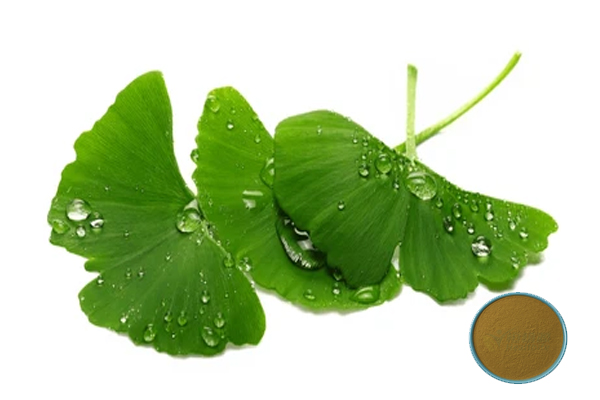
USP Compliant Ginkgo Biloba Extract (Ginkgolic Acid ≤ 1ppm)
LatinName: Ginkgo biloba L.
Assay: Total Ginkgo Flavone Glycosides ≥ 24.0%, Total Terpene Lactones ≥ 6.0%
Méthode d’essai: HPLC
Ginkgolic Acids: ≤ 1.0 ppm (Ultra-Low Acid Toxin Compliance via RP-HPLC) voir aussi:
Pesticide Residue: Compliant with maximum limits defined by EC No 396/2005Et en plusUSP <561>
Heavy Metals: Pb ≤ 1.0 ppm, As ≤ 1.0 ppm, Cd ≤ 0.5 ppm, Hg ≤ 0.1 ppm (USP <2232> / EC No 1881/2006)
Certificate: BRCGS, IFS, Organic (USDA/EU), Halal, Kosher
Sample: 10-50g Free Sample Available (For Lab R&D Testing)
- Description Description
- Fiche technique
-
Whatis USP Compliant Ginkgo Biloba Extract?
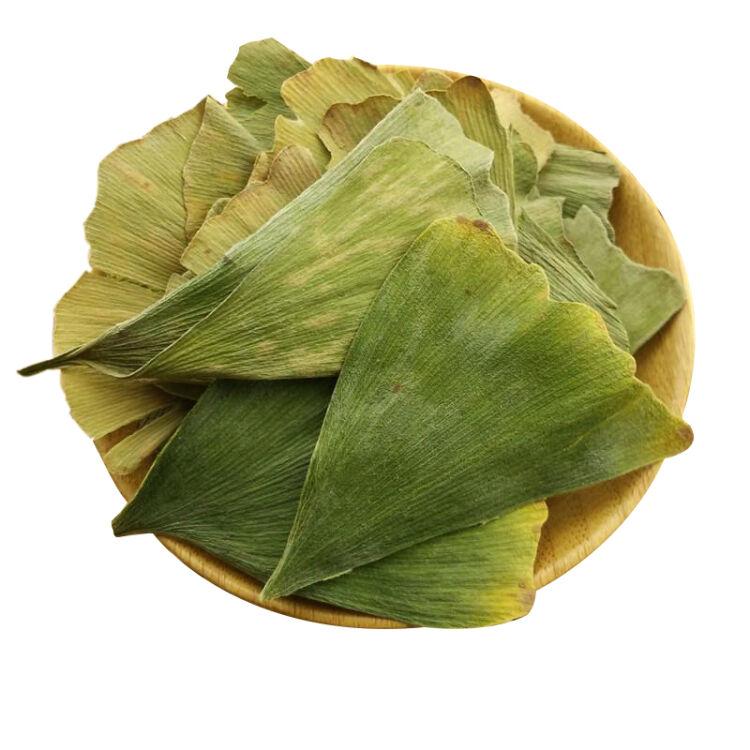
USP Compliant Ginkgo Biloba Extract is a compendial-grade botanical active matrix derived from the dried leaves of Ginkgo biloba L. : (Ginkgaceae) voir aussi: voir aussi: voir aussi: voir aussi: voir aussi:. The raw material undergoes defined multi-stage chromatography purification to yield an ultra-low toxicity profile tailored for highly regulated dietary supplementEt en pluspharmaceutical solid dosage sectors.
The industrial ingredient is chemically standardized to contain ≥ 24.0% total ginkgo flavone glycosides and ≥ 6.0% total terpene lactones via validated HPLC/HPLC-DAD-ELSD analysis. Green Spring Technology coordinates these precise analytical boundaries in strict adherence to current United States Pharmacopeia (USP) Monograph criteria, guaranteeing batch-to-batch chemical homogeneity.
The specialized purification loop enforces a strict quantitative limit on cytotoxic alkylphenols, restricting Ginkgolic Acids (C13:0, C15:1, C17:1) to ≤ 1.0 ppm via validated RP-HPLC. This ultra-low threshold eliminates localized resinous botanical precipitation and satisfies global regulatory requirements governing allergenicity vectors in finished adult dietary supplement formulations.
spécification
Nom du produit
Poudre d’extrait de Ginkgo Biloba
Nom Latin
Ginkgo Biloba L.
CAS non.
90045-36-6
Source:
Dried Leaf of Ginkgo biloba L.
Ingrédients actifs
Total Ginkgo Flavone Glycosides; Total Terpene Lactones
spécification
Total Flavone Glycosides ≥ 24.0%; Total Terpene Lactones ≥ 6.0%
Ginkgolic Acids ≤ 1.0 ppm (Ultra-Low Acid Toxin Compliance via RP-HPLC) Méthode d’essai
HPLC
apparence
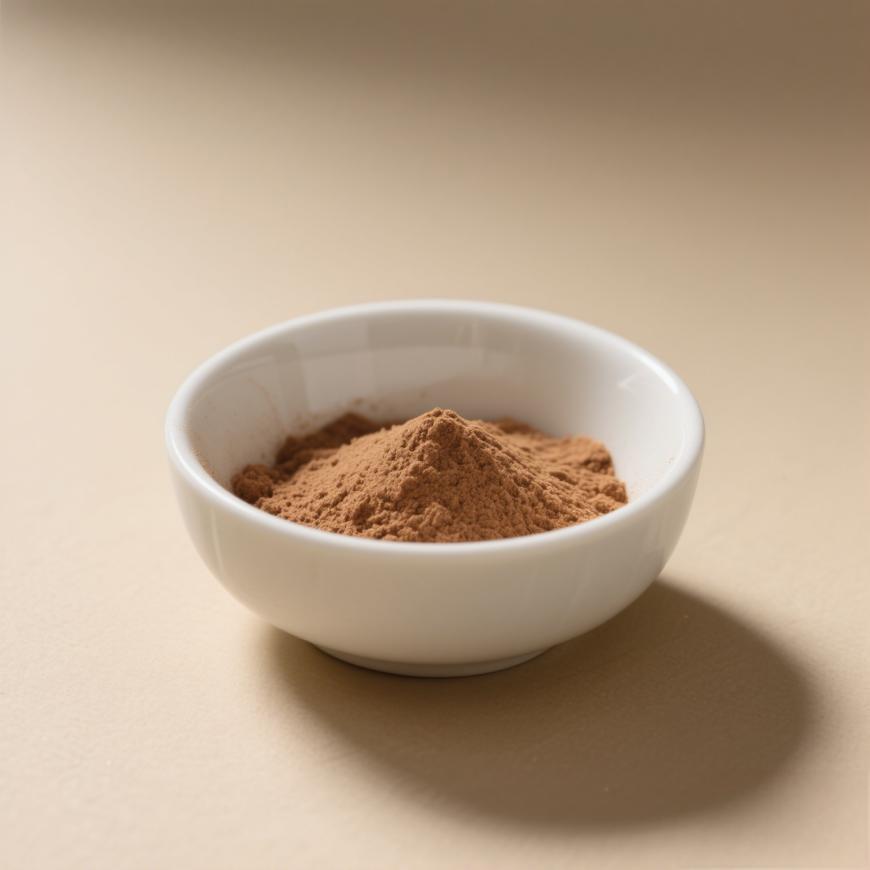
Jaune clair à brun poudre Fine
Mesh Size 100% through 80 Mesh (180 μm) Loss on Drying ≤ 5.0% evaluated under USP <731> protocols at 105°C Ash Content ≤ 0.8% (Low-mineral matrix control via USP <561>) Heavy Metals Pb ≤ 1.0 ppm, As ≤ 1.0 ppm, Cd ≤ 0.5 ppm, Hg ≤ 0.1 ppm (Compliant with USP <2232> / EC No 1881/2006) Microbial Safety Total Plate Count ≤ 1,000 cfu/g; Yeast & Mold ≤ 100 cfu/g (Pathogens Absent via USP <2021/2022>) Résidus de pesticides
100% Compliant with maximum residue limits defined by EC No 396/2005 and USP <561>
Vous cherchez un devis?Contactez nousRequest a Custom QuoteQuality & Compliance
Alkylphenol Speciation Control: Processed via targeted multi-stage adsorption chromatography to isolate polar lipids. Validated RP-HPLC analysis enforces an absolute quantitative boundary restricting the summation of Ginkgolic Acids (C13:0, C15:1, C17:1) ≤ 1.0 ppm, effectively mitigating cytotoxic threshold risks in finished solid dose matrices.
Advanced Elemental Profiling: Inductively Coupled Plasma Mass Spectrometry (ICP-MS) monitors heavy metal boundaries to ensure compliance with USP <2232> and EC No 1881/2006 limits (Pb ≤ 1.0 ppm, As ≤ 1.0 ppm, Cd ≤ 0.5 ppm, Hg ≤ 0.1 ppm), executing full elemental validation per commercial batch.
Validated Chromatographic Fingerprinting: High-Performance Liquid Chromatography paired with a Diode Array Detector and Evaporative Light Scattering Detector (HPLC-DAD-ELSD) verifies the canonical 24/6 baseline (≥ 24.0% Flavone Glycosides / ≥ 6.0% Terpene Lactones), establishing complete peak identity alignment with USP monograph criteria.
Global Manufacturing Qualifications: The processing infrastructure functions under certified corporate governance, fully audited and aligned with BRCGS (Grade A), IFS (Higher Level), ISO 9001 and ISO 22000 international food safety and quality management frameworks.
Dietary & Regulatory Market Access: Batches are formally cross-referenced with valid Halal, Kosher, EU Organic, and USDA Organic certifications, ensuring entry compliance across regulated geographical regions.
Audit-Ready Documentation Linage: Every commercial volume shipment is accompanied by a technical dossier containing batch-specific CoA, TDS, SDS/MSDS, Allergen-Free Statements, and Non-GMO Verification to support multinational compliance verification and corporate source data audits.

Key Advantages
Particulate Flowability & Hopper Delivery: Calibrated to a uniform 100% through 80 mesh powder distribution, the material maintains low hygroscopicity and low static tracking. This prevents powder from sticking to container walls or clogging the hoppers during high-speed automated capsule filling operations.
Formula Compatibility & Sediment Control: Maintaining Ginkgolic Acids ≤ 1.0 ppm via adsorption chromatography prevents the ingredient from reacting with metallic minerals or acid excipients. This safeguards complex multi-ingredient solid formulas from developing insoluble resinous precipitates or quality changes during shelf life.
Tableting Compression Resilience: The standardized 24/6 glycoside-to-lactone matrix withstands the high mechanical pressure and kinetic heat of inline tableting machines, ensuring that tablet cores remain stable without physical splitting or active degradation during dry direct compression.
Authenticity Verification & QC Audits: The natural chromatographic fingerprint matches current USP Monograph criteria under HPLC-DAD-ELSD. This allows your quality control laboratory to instantly verify the extract, confirming zero economic adulteration or synthetic flavonoid spiking.
Application
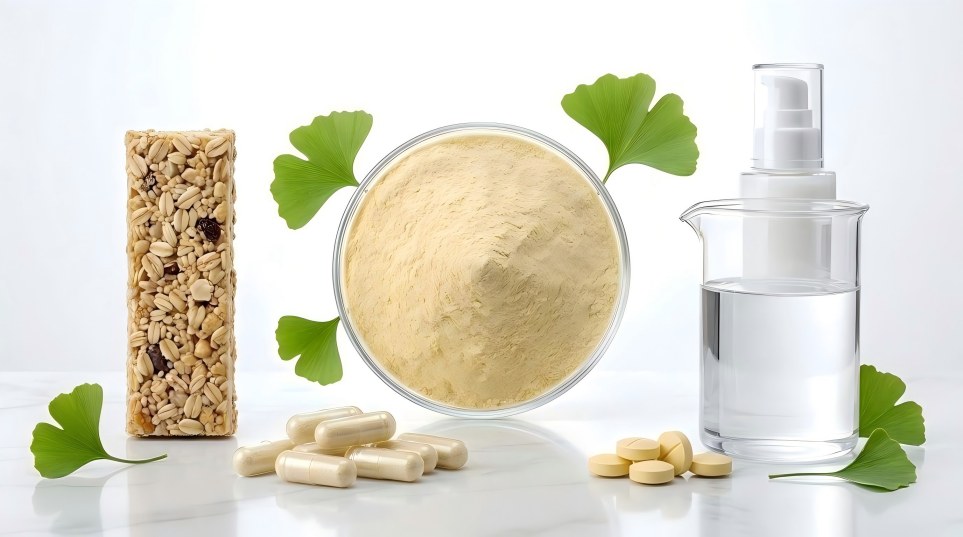
Dietary Supplement Encapsulation: Formulated for automated hard gelatin and veggie capsule filling lines. The high-density powder morphology ensures uniform mass flowability through automated hoppers, preventing material from sticking to container walls and eliminating electrostatic tracking or production line clogging during long-run manufacturing campaigns.
Nutraceutical Tableting Lines: Functions as a compressible bulk powder calibrated for dry direct compression and industrial high-pressure tableting. The controlled particle cohesion preserves structural tablet core integrity under high mechanical stress, preventing capping, lamination, and tablet chipping during high-speed operations.
Solid Functional Food Matrices: Integrated as a standardized polyphenolic active (≥ 24.0% Flavone Glycosides / ≥ 6.0% Terpene Lactones) within high-fiber nutritional bars, breakfast cereals, and dry-blended meal replacement powders. The secondary metabolites maintain thermal stability during standard industrial extrusion profiles without molecular breakdown or flavor degradation.
Topical Personal Care Emulsions: Utilized in the aqueous or oil-in-water emulsion phases of adult personal care creams and protective lotions. Selecting this designated ultra-low toxic variant (Ginkgolic Acids ≤ 1.0 ppm) addresses strict dermal sensitivity and chemical purity criteria required by global cosmetic regulatory matrices.
Technical FAQ
Q1: What specific column separation setup ensures that USP Compliant Ginkgo Biloba Extract consistently limits cytotoxic ginkgolic acids to ≤ 1.0 ppm?
A: Production lines utilize a multi-stage macroporous resin chromatography system paired with selective solvent partitioning to strip cytotoxic alkylphenols, specifically Ginkgolic Acids (C13:0, C15:1, C17:1). This automated purification cycle removes allergen-prone lipophilic fractions without altering active constituent ratios, securing a repeatable threshold of ≤ 1.0 ppm in compliance with current USP and EP monograph criteria.Q2: How does the manufacturing facility prevent batch-to-batch cross-contamination to safely lock the ≤ 1.0 ppm threshold for this Ultra-Low Acid Ginkgo Leaf Extract?
A: Green Spring Technology processes this compendial-grade material on a specialized, hermetically closed production loop completely separate from standard botanical extraction lines. Between manufacturing lots, automated Clean-in-Place (CIP) protocols utilizing alkaline washes and ethanol rinses are executed, validating final batch release via highly sensitive LC-MS/MS validation to verify baseline purity.Q3: Does the intensive adsorption chromatography required for the ≤ 1.0 ppm redline degrade the active 24% flavones or 6% lactones in Standardized Ginkgo Biloba Leaf Extract?
A: The chromatographic parameters operate at calibrated desorption kinetics that preserve the active molecular matrix. High-Performance Liquid Chromatography paired with a Diode Array Detector and Evaporative Light Scattering Detector (HPLC-DAD-ELSD) fingerprint analysis confirms that the independent sub-fractions—including Bilobalide and Ginkgolides A, B, and C—remain intact in their natural ratios, delivering a stable ≥ 24.0% Flavone Glycosides / ≥ 6.0% Terpene Lactones profile.Why Partner With Green Spring Technology?
Chronological Industrial Supply: Established in 2000, Green Spring Technology delivers over two decades of manufacturing scaling, global logistics execution, and documented botanical supply chain stability across international B2B sectors.
In-House Analytical R&D Support: Supported by an independent application laboratory equipped with advanced HPLC-DAD-ELSD, GC-MS, and ICP-MS instrumentation, technical capabilities provide custom active standardizations, bulk density calibrations, and particle mesh size adjustments to match precise solid dose formulation requirements.
Full-Chain Identity Preservation Traceability: The quality assurance infrastructure enforces comprehensive traceability metrics from field cultivation through raw material sorting, multi-stage column extraction, and isolation. This grid provides complete batch history transparency to satisfy international corporate raw material source data audits.
Streamlined Customs Clearance Documentation: Regulatory compliance personnel coordinate batch-specific documentation to support global qualification andtechnical review workflows. Every shipment includes a standardized technical dossier containing valid CoA, TDS, SDS/MSDS, Non-GMO Verification, and non-irradiation declarations to streamline international port entry.
-
Download Data Sheet: COA, TDS, MSDS Please fill in the form below to receive the full technical documents via email.